
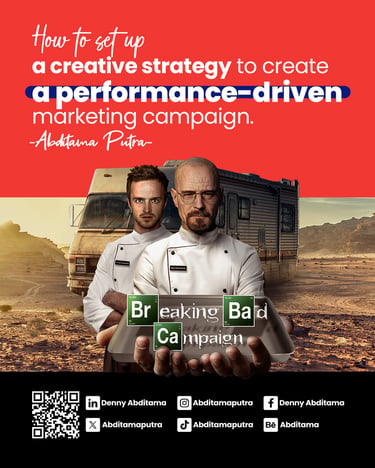
How to set up a creative strategy to create a performance-driven marketing campaign
Why don't most campaigns work? They're right but not interesting, and no one notices or remembers them. When I think about and discuss campaigns, it's like a power slap right to my face. I thought of a simple journey about preparing a marketing campaign to achieve the objective or more significant goals. So here is the essential "go-to" handbook from my perspective, based on all my references.
CAMPAIGN
How to Set Up a Creative Strategy to Create a Performance-Driven Marketing Campaign
Why Most Marketing Campaigns Fail
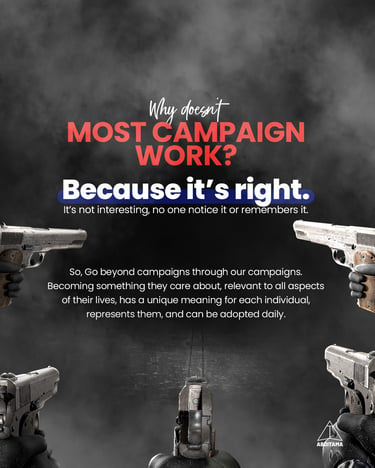
Most campaigns don’t fail because they’re wrong. They fail because they’re invisible.
Every day, consumers are exposed to thousands of marketing messages competing for a few seconds of attention. Most campaigns successfully communicate what a product does, what promotion is running, or why a brand exists. Yet despite being technically correct, they leave no lasting impression.
A campaign that is merely informative rarely changes behavior. It doesn’t create emotion, spark conversation, or build memory. Whenever I discuss campaign strategy, I imagine receiving a power slap across the face—a sudden reminder that audiences don’t owe us their attention. We have to earn it.
That realization inspired me to simplify how I think about creative strategy. Over the years, I’ve studied books, campaigns, interviews, behavioral science, and countless creative case studies. Eventually, everything began to connect into one practical framework.
This article isn’t meant to be the only way to build a campaign. Instead, it serves as my personal handbook, a journey that transforms business objectives into creative ideas capable of driving real marketing performance.
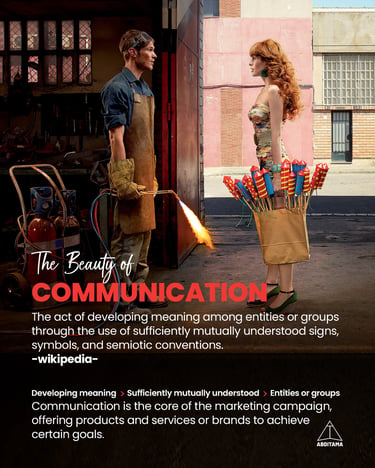
The Beauty of Communication
Communication is more than speaking.
It is the process of creating shared understanding between people. Marketing exists because communication exists. Every advertisement, social media post, activation, product launch, and customer experience is essentially an attempt to transfer meaning from a brand to an audience.
Consumers don’t interpret messages based solely on what brands say. They interpret them through culture, personal experience, emotions, timing, and expectations. Creative strategy begins by reducing that gap. Before asking whether an advertisement looks beautiful, we should first ask:
“Will people understand the message the way we intended?” Because effective communication isn’t about speaking louder. It’s about making meaning clearer.
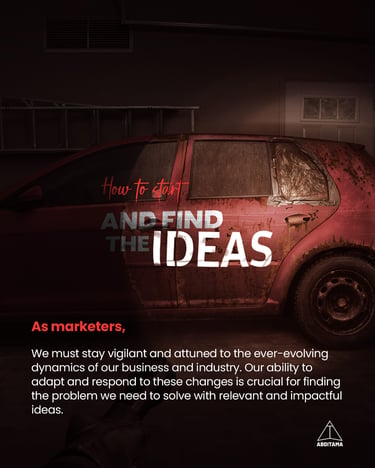
How to Start and Find the Ideas
Ideas rarely appear out of nowhere.
Great ideas are usually the result of curiosity, observation, and continuous adaptation. Marketing exists inside a constantly changing environment. Consumer behavior shifts. Competitors evolve. Technology changes. Cultural conversations move every week.
Creative strategists must remain curious enough to notice these changes before everyone else. The strongest campaigns often begin by asking simple questions:
What changed?
Why are people behaving differently?
What frustrates them?
What opportunity is everyone ignoring?
Ideas are not destinations. They are responses to newly discovered problems.
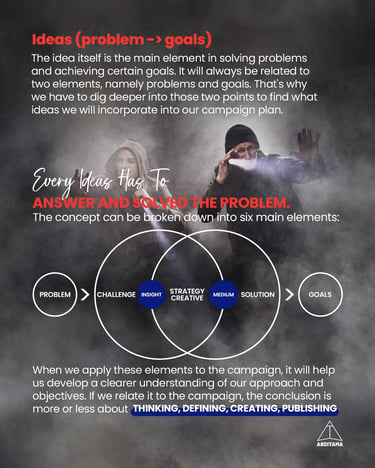
Ideas (Problem → Goals)
Ideas are valuable only when they solve something.
Many brainstorming sessions produce hundreds of concepts, yet only a handful deserve to become campaigns because only a few directly connect problems with objectives.
An idea should always sit between two points:
Problem → Goal.
Everything else supports that journey. The framework can be simplified into six connected components:
Problem
Challenge
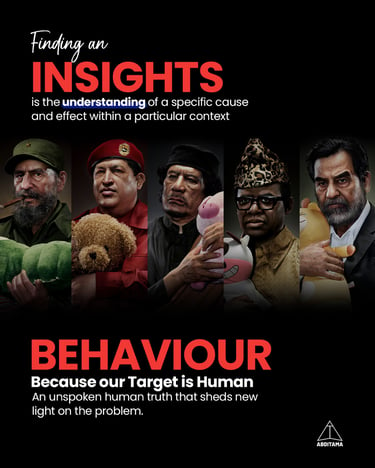
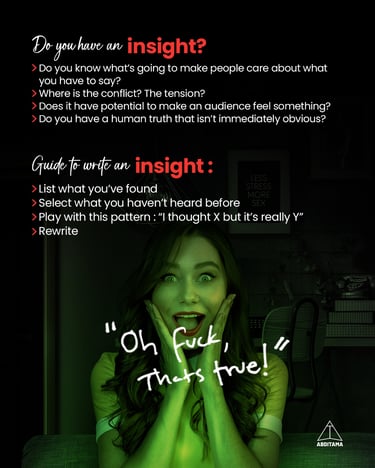
Insight
Creative Strategy
Medium
Solution
Each element strengthens the next. Every strategist begins without complete clarity. The flashlight cutting through the fog symbolizes strategic thinking finding direction instead of chasing random inspiration. When these six components align, campaign execution becomes significantly easier because every creative decision has a strategic reason behind it.
Ultimately, campaign development becomes a process of:
Thinking. Defining. Creating. Publishing.
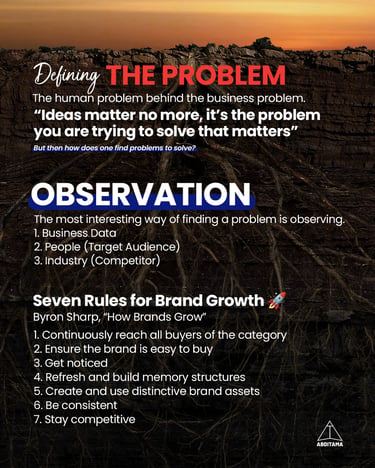
Defining the Problem
Ideas are only as valuable as the problems they solve. One of the biggest mistakes marketers make is falling in love with creative execution before understanding the real business challenge. Businesses often focus on symptoms—declining sales, low engagement, or stagnant awareness when the real issue lies beneath the surface. Like the roots of a tree, the true problem is rarely visible at first glance.
Business
Analyze business performance through revenue trends, customer journeys, conversion rates, retention, profitability, and operational constraints. These metrics reveal where the business is struggling and where growth opportunities exist.
People
Go beyond demographics to understand how people think, feel, and behave. Explore their frustrations, motivations, routines, and unmet needs, because customers rarely buy products; they buy solutions to problems.
Industry
Study the competitive landscape to understand category expectations and identify opportunities to differentiate. Observation should inspire strategic positioning, not imitation. As Byron Sharp reminds us, sustainable brand growth comes from building mental availability, distinctive brand assets, and making brands easy to choose.
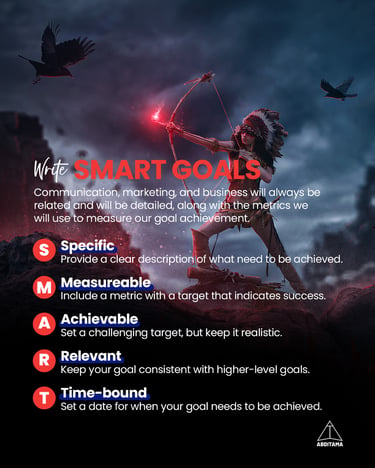
Write SMART Goals
Without clear objectives, creativity becomes impossible to evaluate. A campaign may generate impressive reach or engagement, but if those results don’t contribute to business outcomes, it hasn’t succeeded. SMART goals provide a simple framework for turning ambition into measurable performance.
Specific
Define exactly what success looks like. Instead of simply aiming to “increase awareness,” identify who you want to reach and what outcome you expect.
Measurable
Establish clear metrics that allow success to be tracked objectively. Numbers create accountability and help teams evaluate campaign performance.
Achievable
Set ambitious but realistic goals that consider available resources, budget, timeline, and operational capabilities.
Relevant
Ensure every objective supports broader business priorities. Creative work should always serve a strategic purpose rather than exist for its own sake.
Time-bound
Set a clear deadline to create focus and momentum. Like an archer aiming at a target, campaigns become more effective when everyone knows exactly what they’re trying to achieve and by when.
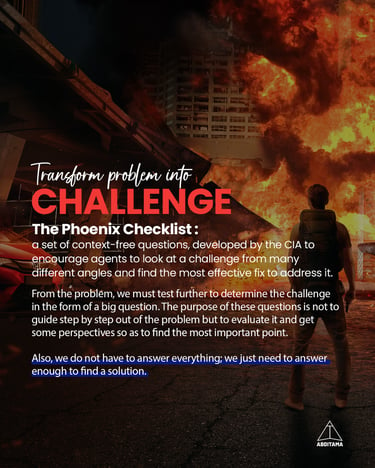
Transform Problem into Challenge
Once the problem is clearly defined, the next step is to reframe it as a challenge. Problems describe what is happening, while challenges invite action and possibility. Instead of asking why engagement is low, ask how the brand can encourage people to actively participate. This shift transforms limitations into opportunities for creative thinking.
The Phoenix Checklist encourages strategists to explore multiple perspectives before jumping into solutions. By questioning assumptions, removing constraints, considering customer behavior, and identifying overlooked opportunities, better questions often lead to better ideas.
Ultimately, the strategist’s role isn’t to have every answer. It’s to understand the problem deeply enough to ask the right questions and guide the team toward meaningful solutions.
Start with Strategy
Good Campaigns Don’t Start with Creative. They Start with Questions.
Everyone loves jumping straight into brainstorming. Someone inevitably says, “Let’s make something viral,” another person starts moodboarding, and within thirty minutes there are already twelve logo animations nobody asked for. It feels productive, but it’s usually the marketing equivalent of decorating a house before checking whether it has a foundation.
Real strategy begins long before the first headline is written or the first designer opens Photoshop. It starts by understanding the business problem we’re actually trying to solve. What are we good at? Who are we competing against? Who exactly are we talking to? Why should anyone believe us? More importantly, why should they care?
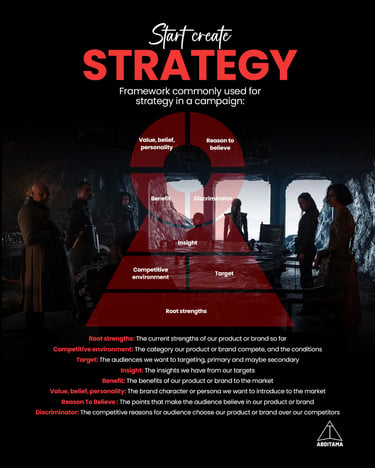
A simple framework can keep every campaign grounded. Start with your root strengths. What do you genuinely do better than everyone else? Then study the competitive environment, because your competitor isn’t always another brand. Sometimes it’s people’s habits, short attention spans, or simply Netflix.
Next comes your target audience. “Everyone” isn’t a target. It’s a fantasy. Once you know who you’re talking to, you can uncover an insight, the human truth behind their behavior. From there, define the benefit your product actually delivers, shape the personality your brand should express, provide a compelling reason to believe, and finally identify your discriminator, the thing competitors can’t easily copy.
Think of strategy as assembling IKEA furniture. If you skip the instructions because you’re “pretty sure you get it,” don’t be surprised when you’re left holding three mysterious screws and wondering why the table wobbles.
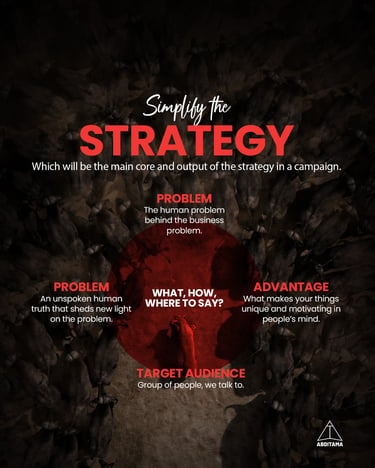
Simplify the Strategy
If You Can’t Explain It Simply, You Probably Haven’t Finished Thinking.
One of the biggest misconceptions about strategy is that it needs to sound complicated. Somewhere along the way, people decided that filling fifty PowerPoint slides with buzzwords somehow makes an idea more strategic. It doesn’t. It just makes everyone nod politely while secretly checking Slack.
The best strategies are surprisingly simple because they’ve already done the hard thinking. Almost every campaign can be distilled into four questions. Who are we talking to? What human problem are they actually facing? What advantage does our brand have? And finally, what should we say?
Notice the emphasis on human problems, not business problems. Businesses love saying things like, “We need to increase market penetration by 15%.” Customers wake up thinking, “I wish this problem in my life were easier.” Those are two very different conversations.
Nobody buys a luxury watch because they’re passionate about accurate timekeeping. Nobody joins a premium gym because they enjoy paying monthly fees. People buy confidence, status, convenience, belonging, or peace of mind. The product is simply the vehicle.
The goal of strategy is to remove complexity until everyone on the team can explain it without sounding like they’re reading from a management consulting report. If your intern can’t explain the strategy after hearing it once, chances are the customer won’t understand it either.
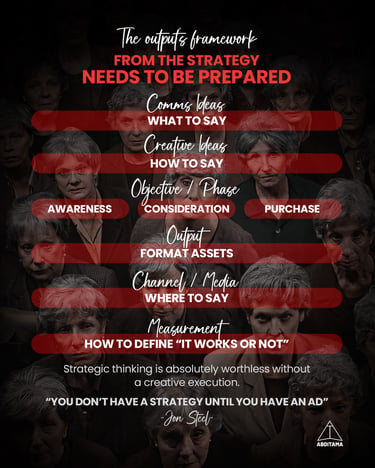
The Strategy Needs an Output
Because a Great Strategy Sitting in Google Drive Changes Absolutely Nothing.
A strategy document isn’t the finish line. It’s the starting point. The moment strategy is approved, it has to transform into real marketing assets that customers will actually experience. Otherwise, it’s just another beautifully designed PDF collecting digital dust next to “Final_v7_ReallyFinal_Final2.pptx.”
Every strategy should answer five practical questions.
First, what should we say? This becomes the communication idea, the core message that every execution revolves around.
Second, how should we say it? That’s where creative ideas come in. The exact same message can be delivered through humor, emotion, storytelling, controversy, or simplicity. The strategy stays the same. The execution changes.
Third, when should people hear it? Someone discovering your brand for the first time doesn’t need the same message as someone who’s already comparing prices. Awareness, consideration, and purchase each require different conversations.
Fourth, where should we say it? A brilliant TikTok campaign probably won’t help if your audience spends their day reading LinkedIn. Distribution isn’t an afterthought. It’s part of the strategy.
Finally, how do we know it worked? If success is measured by “everyone liked the design,” you’ve already lost. Good campaigns measure business impact, not compliments in the meeting room.
As Jon Steel famously said, “You don’t have a strategy until you have an ad.” We’d add one more sentence: you don’t have a successful strategy until customers actually respond to that ad.
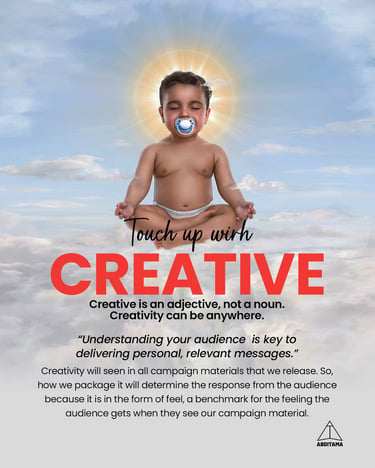
Touch It Up with Creative
Creativity Is the Multiplier, Not the Starting Point.
Once strategy gives you direction, creativity gives people a reason to pay attention. Too often, people treat creativity like it’s a department with bean bags, neon signs, and someone who insists every campaign should be “disruptive.” In reality, creativity is much simpler than that. It’s the art of making people stop scrolling.
Creative isn’t limited to commercials with cinematic drone shots or clever taglines that win awards. Creativity can live inside an onboarding email, a product package, customer service, or even a confirmation page after checkout. If it improves how people experience your brand, congratulations, you’ve just been creative.
The best creative work always starts with empathy. When you genuinely understand your audience, the ideas almost begin writing themselves. You know what makes them laugh, what frustrates them, what they secretly believe, and what they’re tired of hearing.
Creativity isn’t about making things prettier. It’s about making things memorable. Because nobody shares an ad that was merely “correct.”
Why Most Campaigns Don’t Work
Because They’re Right… and That’s the Problem.
Here’s an uncomfortable truth. Most campaigns don’t fail because they’re wrong. They fail because they’re painfully, aggressively, spectacularly correct. The messaging is accurate. The product claims are factual. The branding guidelines are perfectly followed. Legal has approved every sentence. Everyone leaves the meeting feeling safe. Unfortunately, customers don’t reward safe.
People don’t remember advertisements because they were technically accurate. They remember them because they made them laugh, think, cry, argue, or say, “Wait… that’s actually brilliant.”
Today, your campaign isn’t competing only against competitors. It’s competing against vacation photos, football highlights, conspiracy theories, dog videos, breaking news, and someone accidentally setting their kitchen on fire while making pasta.
Being correct simply isn’t enough anymore. The campaigns that survive aren’t the ones with the most information. They’re the ones people voluntarily give their attention to.
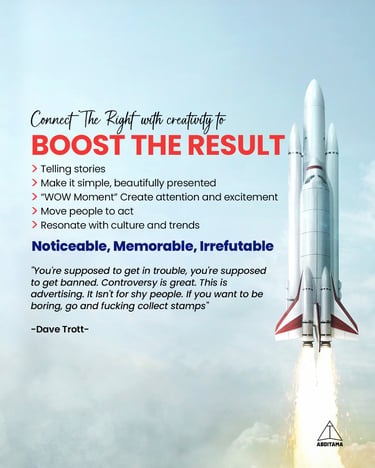
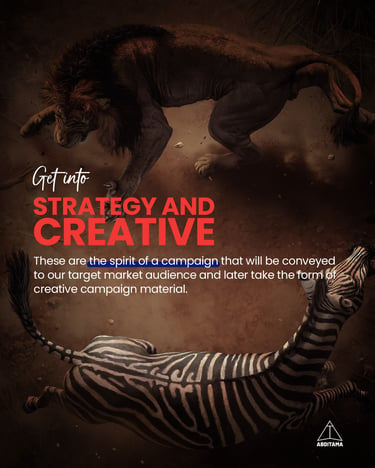
Connect Strategy and Creativity to Boost the Result
Logic Makes People Understand. Creativity Makes Them Remember.
The best campaigns are never purely strategic, nor purely creative. Strategy tells you where to go. Creativity convinces people to come along for the ride.
When both work together, campaigns become significantly more powerful. They tell stories instead of listing product features. They simplify complicated ideas into something anyone can repeat. They create those little “wait… that’s clever” moments that stick in people’s heads long after the ad has disappeared.
Great campaigns also understand culture. They know when to join conversations instead of interrupting them. They know when humor works, when emotion works, and when saying less actually says more.
Dave Trott once argued that advertising isn’t supposed to play it safe. It’s supposed to stand out. He’s right. Marketing has never rewarded the brand that blended in perfectly with everyone else.
The goal isn’t simply to make an advertisement. It’s to create something noticeable enough to earn attention, memorable enough to be recalled later, and convincing enough that people actually change their behavior.
Because in the end, nobody buys because your strategy deck looked beautiful. They buy because your strategy was translated into an idea they couldn’t ignore.
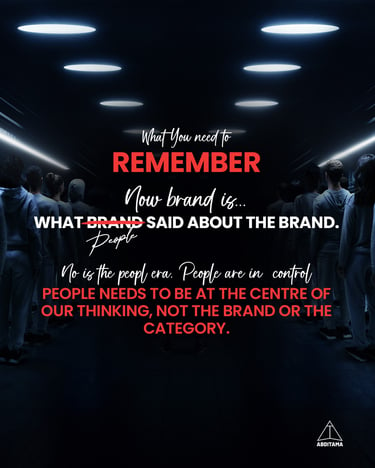
What You Need to Remember
Brands Don’t Define Brands. People Do.
If there’s one lesson that every marketer, founder, and creative should walk away with, it’s this: your brand is no longer what you say it is. It’s what people say it is.
There was a time when brands controlled the narrative. Companies bought TV spots, printed magazine ads, rented billboards, and told consumers exactly who they were. The audience had little choice but to listen. Today, that power has shifted. Customers can review your product before you finish your launch event, compare you with ten competitors in under five minutes, and publicly share their experience with thousands of people before your social media manager has finished typing, “Hi! Sorry to hear about your experience.”
Welcome to the people era. Whether we like it or not, brands no longer own their reputation. They earn it, one customer interaction at a time.
This is why modern marketing can’t begin with the brand. It can’t begin with the product, the logo, or the category. It has to begin with people. What do they care about? What frustrates them? What motivates them? What do they believe? What problem are they trying to solve when your product enters their life?
Too many campaigns are built around what the company wants to say. Great campaigns are built around what people actually want to hear. That’s a subtle difference, but it changes everything.
Instead of asking, “How do we promote this feature?” ask, “Why would someone care?”
Instead of asking, “How do we position our brand?” ask, “What role do we want to play in people’s lives?”
Instead of asking, “How do we beat the competition?” ask, “How do we become the obvious choice for the people we’re serving?”
The answers rarely come from the boardroom. They come from conversations with customers, observations of real behavior, and an honest curiosity about human nature.
Ironically, the more you obsess over people, the stronger your brand becomes. Because people don’t build relationships with logos. They build relationships with experiences. They remember how your brand made them feel when they needed it, how it solved a problem they actually had, or how it understood them better than everyone else.
That’s why the strongest brands in the world don’t spend every minute talking about themselves. They spend most of their time understanding the people they’re trying to serve. So if this entire guide could end with one final reminder, let it be this:
Strategy starts with people. Insights come from people. Creativity exists for people. Campaigns succeed because of people.
The brand is simply the result. When people become the center of your thinking, better marketing isn’t just possible. It’s inevitable.
© 2026 Abditamaputra – Inspired to Inspire.