
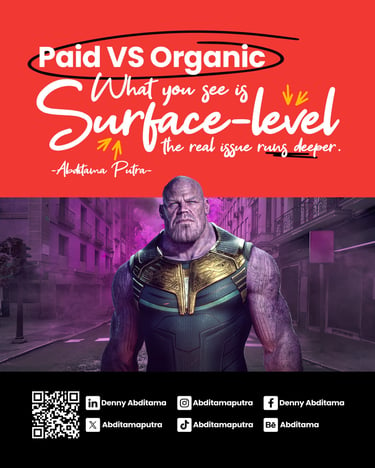
Paid vs Organic, What You See is Surface-Level The Real Issue Runs Deeper
Paid vs Organic: One drains your budget, the other drains your soul. On the surface, it’s just a numbers game. But behind the scenes, it’s a war of strategy, patience, and late-night campaigns. Let’s get one thing straight: organic isn’t dead; it’s just been ghosted by boring content. And paid? Oh, paid is alive and well… but only if you’re not using it to boost mediocrity to VIP status. Flashy ads can get clicks, sure, but if your message is forgettable, all you did was fund digital tumbleweeds.
MARKETING
Marketing has always loved comparisons. Brand versus performance. Awareness versus conversion. Creativity versus data. And perhaps the most common debate today: Paid versus Organic. While the discussion usually focuses on budgets, algorithms, and media performance, those are only the visible symptoms. The real issue lies much deeper.
Too often, brands assume that increasing ad spend will solve declining engagement or that organic reach is impossible because algorithms have changed. In reality, neither paid nor organic is the problem. They’re simply vehicles that deliver your message. If the message itself lacks relevance, clarity, or emotional value, no amount of optimization can create lasting impact.
Like Thanos collecting the Infinity Stones, marketers spend enormous effort gathering every possible advantage—better targeting, stronger media buying, AI tools, analytics, and automation. But power without purpose accomplishes very little. Great marketing isn’t built on bigger budgets; it’s built on stronger ideas.
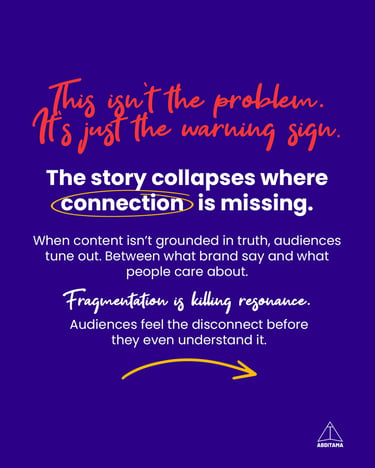
This Isn’t the Problem. It’s Just the Warning Sign.
When marketing performance declines, most teams immediately search for external explanations. Organic reach is down. CPM is increasing. Competition is becoming more aggressive. The algorithm must have changed.
These explanations are convenient because they avoid the harder question: Did our content actually deserve attention?
Poor performance is rarely the real problem it is simply the warning sign. The deeper issue begins long before a campaign goes live. It starts when brands focus solely on what they want to communicate instead of understanding what people genuinely care about. When content isn’t grounded in real human insight, audiences disengage almost instantly.
The story collapses where connection is missing. Fragmentation between brand messaging and audience reality quietly destroys resonance long before the numbers begin to decline.
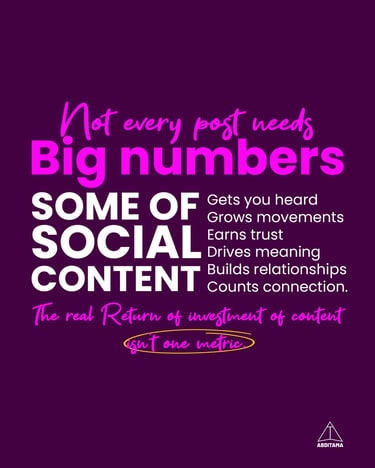
Not Every Great Piece of Content Needs Big Numbers
Marketing has become obsessed with performance dashboards. Every campaign is judged by impressions, clicks, engagement rates, and conversions. While these metrics are valuable, they don’t tell the complete story.
Some of the most impactful pieces of content will never generate millions of views. Instead, they create trust, strengthen relationships, shape perception, and build communities that continue to grow over time. Those outcomes are far more difficult to measure, yet they often deliver the greatest long-term value.
The true return on investment isn’t found in one metric. Great content gets your brand heard, earns trust, creates meaningful conversations, and builds relationships that extend beyond a single campaign. Numbers measure performance, but connection creates influence.
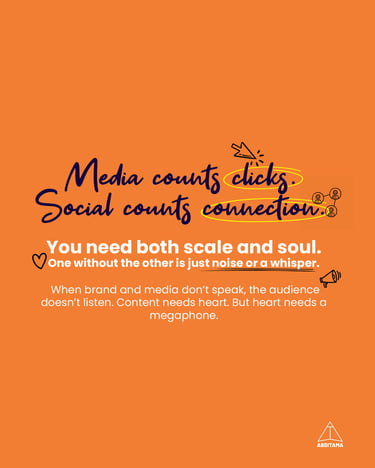
Media Counts Clicks. Social Counts Connection.
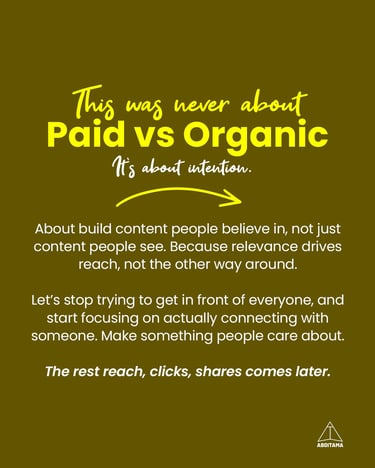
Paid media and organic content should never compete against each other. They serve different purposes.
Media creates scale. Social creates connection.
Without distribution, even brilliant ideas may never reach the people who need to hear them. But without meaningful content, advertising simply amplifies something people weren’t interested in to begin with.
Brands need both scale and soul. Content provides the reason people should care, while media ensures the right people have the opportunity to discover it. One without the other either becomes noise or remains an unheard whisper.
Creators Understand Something Many Brands Forget
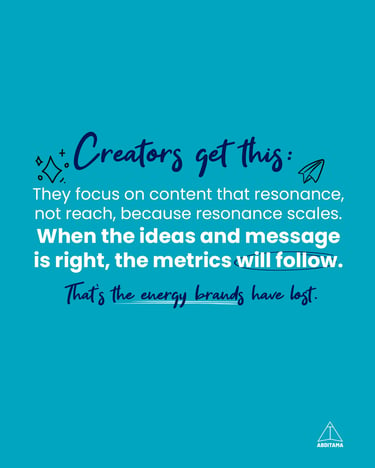
The world’s best creators rarely begin with the question, “How do I maximize reach?” Instead, they ask something much more valuable: “Why would someone care enough to stop scrolling?”
Creators understand that resonance always comes before reach. They invest their energy into developing ideas that feel authentic, relatable, entertaining, or emotionally meaningful. As a result, audiences voluntarily engage with and share their content.
Ironically, when the message resonates deeply enough, the metrics often follow naturally. That’s the mindset many brands have gradually lost by optimizing for algorithms before optimizing for people.
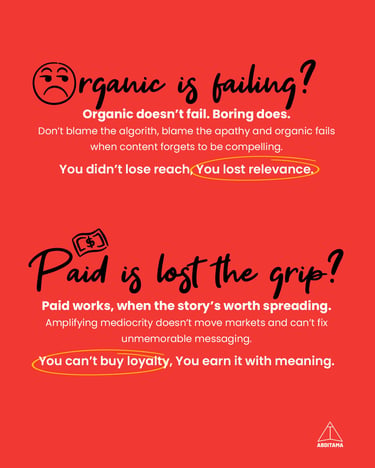
Organic Isn’t Failing. Boring Content Is.
It’s easy to blame declining reach on changing algorithms, but algorithms simply reward what audiences choose to engage with. When content feels repetitive, predictable, or disconnected from real human interests, people scroll past it without hesitation.
You didn’t necessarily lose reach, you may have lost relevance. Organic success has never depended solely on platform mechanics. It depends on creating content that earns attention rather than demanding it.
Paid Isn’t Broken Either
Paid advertising remains one of the most powerful tools available to marketers, but it was never designed to rescue weak ideas.
Advertising amplifies whatever message you provide. If your story is compelling, paid media accelerates growth. If your content lacks originality or emotional impact, paid media simply helps more people ignore it.
You can purchase impressions, clicks, and awareness. You cannot purchase trust, loyalty, or advocacy. Those are earned by consistently delivering meaningful experiences. Paid works best when the story is already worth spreading.
Are We Choosing Between Paid and Organic?
This question assumes there is a winner. There isn’t.
The most successful brands understand that paid and organic are partners rather than competitors. Organic builds credibility, trust, and long-term relationships. Paid creates momentum, scale, and efficient distribution. The better question isn’t which channel deserves your budget. The better question is whether your idea deserves both.
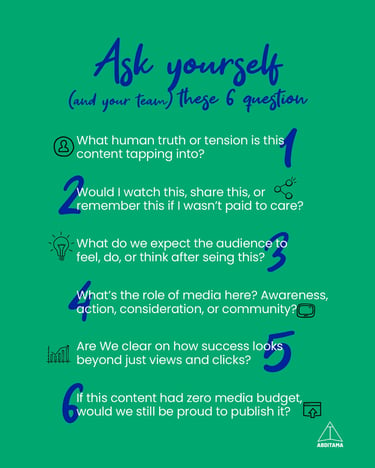
Six Questions Every Marketing Team Should Ask Before Publishing
Before approving another campaign, take a step back and ask:
What human truth or emotional tension is this content built around?
Would I genuinely watch, share, or remember this if I weren’t responsible for creating it?
What do we expect people to think, feel, or do after experiencing this content?
What role is media playing in this campaign: awareness, consideration, action, or community?
Have we clearly defined success beyond views, clicks, and impressions?
Finally, if this campaign had no advertising budget behind it, would we still feel proud to publish it?
These questions often reveal whether the problem lies in distribution or in the idea itself.
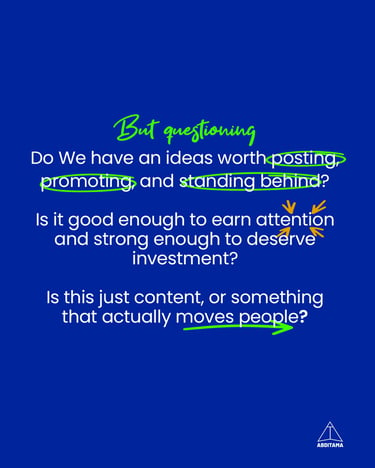
Do We Have an Idea Worth Posting, Promoting, and Standing Behind?
Before discussing targeting, media budgets, or campaign objectives, every team should answer one simple question.
Is this idea genuinely worthy of people’s attention?
Is it strong enough to earn organic engagement?
Is it valuable enough to justify paid investment?
Is it capable of moving people—not just improving dashboards?
The strongest campaigns don’t rely on media to create value. They use media to amplify value that already exists.
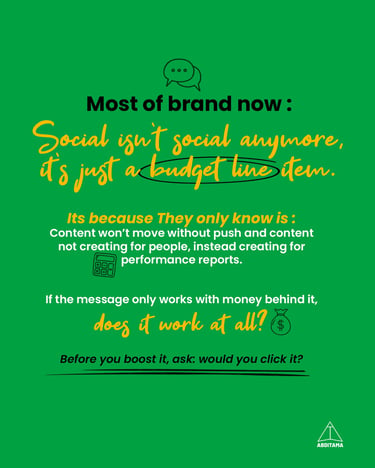
Social Isn’t Social Anymore. It’s Just a Budget Line Item.
Many brands now approach social media as another performance channel rather than a place to build relationships. Content is created to satisfy reporting requirements, maintain publishing calendars, and justify advertising budgets instead of creating genuine value for audiences.
As a result, social platforms have become less social and more transactional.
If a message only succeeds when supported by advertising spend, it’s worth asking whether the message is truly compelling in the first place. Before boosting another post, ask yourself one simple question:
Would you click on this if it wasn’t your brand?
Because in the end, this has never really been about choosing between Paid and Organic. It has always been about creating ideas that deserve both attention and investment.
© 2026 Abditamaputra – Inspired to Inspire.